caesaria
Theatre and hippodrome
Caesarea, founded by Herod the Great in the 1st century BCE, became one of the most remarkable cities of the Roman era. Among its grand constructions, two monuments have survived almost intact to this day:
The Roman Theater – Once accommodating around 4,000 spectators, this seaside amphitheater hosted tragedies, concerts, and even gladiator fights. It stands as a prime example of Roman engineering, featuring advanced aqueduct-fed water systems and elegant stonework.
The Hippodrome (Horse Racing Arena) – One of the largest in the region, it could hold up to 15,000 spectators. This was the site of thrilling chariot races and equestrian competitions, as confirmed by archaeological findings.
Both structures impress visitors with their scale, craftsmanship, and preservation — from arched corridors to fragments of marble columns. Today, visitors can freely explore these sites without advance booking. In summer, the ancient theater once again comes alive with concerts and live performances, blending history with modern culture.


Medieval Caesarea: The Age of the Crusaders
After the Muslim period and a later restoration, Caesarea once again became an important stronghold during the Crusader era.
From the 11th to the 13th centuries, the city was fortified with walls, a castle, and a priory, serving as a strategic hub for the Crusader Kingdom of Jerusalem.
Under the rule of the Crusader nobility, Caesarea flourished both architecturally and militarily. Excavations have uncovered the remains of the fortress, including underground crypts, columned halls, and narrow corridors that reveal the craftsmanship and defensive genius of the era.
The Crusaders of Caesarea also strengthened the city’s coastal defenses and built religious structures within the fortified town.
In 1265, Caesarea was captured by the Mamluks, who destroyed most of the Crusader buildings — yet the ruins still impress visitors with their scale and the sense of medieval grandeur that lingers among the stones.


Arch Museum, exhibitions and entertainment
Today, Caesarea is far more than ancient ruins — it is a vibrant cultural and tourist complex that blends archaeology, history, and modern leisure.
Cafés and the Promenade:
Charming seaside cafés operate right by the ancient ruins, offering visitors a perfect spot to relax and enjoy the Mediterranean view.
Exhibitions and Concerts:
In April 2025, Caesarea will host a retro car exhibition, and in summer, open-air musical performances take place in the ancient Roman theater. The site regularly features art and history exhibitions, attracting culture lovers from all over Israel and beyond.
Archaeological Museum:
A short 15-minute film tells the story of Caesarea’s development under King Herod, adding context to the magnificent archaeological park.
The Archaeological Park of Caesarea is open year-round from 8:00 a.m. to 6:00 p.m.
Entrance fee: 77 shekels, which includes access to the park and multiple events.
Caesarea is a unique fusion of Roman grandeur, Crusader legacy, and contemporary culture.
Here, you can literally walk through thousands of years of history, listen to live music under the stars, and enjoy the sea view — where the echoes of the past blend seamlessly with the present.


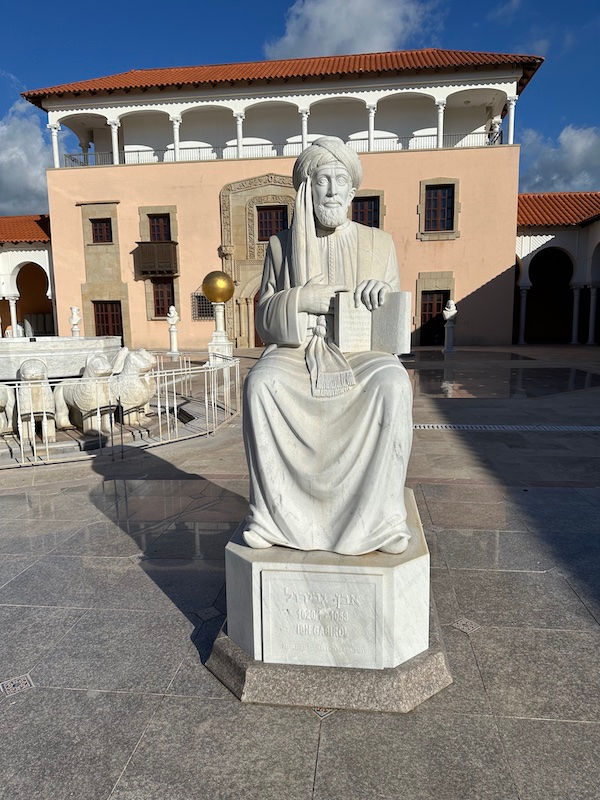


Rally Museum
The Ralli Museum in Caesarea was founded in 1993 by philanthropist Harry Recanati and his family. It became the third in the series of Ralli Museums, following those established in Uruguay and Chile.
The complex consists of two distinct buildings, each with its own theme and artistic focus:
First Building — Latin American and European Art
Designed in Spanish colonial style, this building spans over 9,000 m² and is surrounded by a 40-hectare sculpture garden.
Its collection includes works by Salvador Dalí, Auguste Rodin, André Masson, as well as leading Latin American artists.
Also featured are archaeological artifacts from the Hellenistic, Roman, Byzantine, Islamic, and Crusader periods — a testament to Caesarea’s rich and layered history.
Second Building — Sephardic and Biblical Heritage
Opened in 2007, the second building celebrates the Golden Age of Sephardic art.
Constructed in the Mudejar architectural style, it features a central courtyard with a fountain of twelve lions and statues of philosophers such as Maimonides, Ibn Gabirol, and Spinoza.
Inside, visitors can admire European paintings of the 16th–18th centuries, focusing on biblical and Judaic themes.
Collections and Highlights
-
Modern Latin American and Spanish art, with an emphasis on surrealism — featuring masterpieces by Dalí, Rodin, and Masson.
-
Archaeological discoveries from ancient Caesarea, developed in collaboration with the Smithsonian Institution.
-
Historical and biblical paintings, exploring Sephardic Jewish heritage and the dialogue between European and Middle Eastern cultures.
The Ralli Museum offers free admission and invites visitors to experience a rare fusion of art, history, and philosophy in a serene Mediterranean setting.


